
The short answer
A widebody kit fits properly when the wheels, tires and ride height are decided before the kit is touched, the panels are test-fitted and measured at least twice before anything is cut or drilled, the hardware is corrosion-proof, and the paint or PPF is applied after final fitment. Skipping any of those steps is why most kits end up with uneven gaps and rubbing tires.
Start with the wheels, not the kit
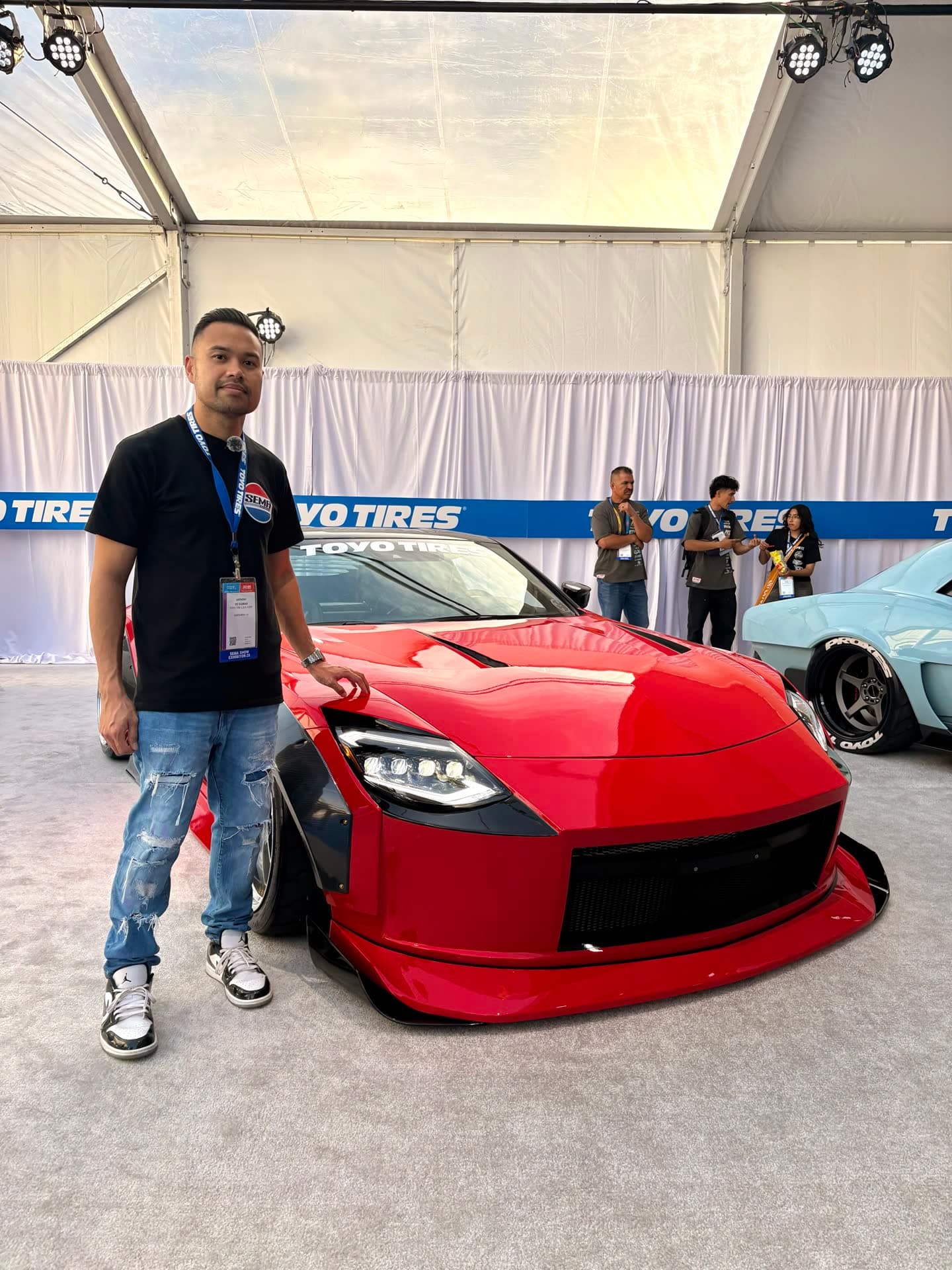
A widebody kit adds width to the arches so wider wheels and tires can sit under them. That means the final wheel width, offset and tire size decide where the flares need to sit, not the other way round. On the Z we settled on 18x11 front and 18x13 rear SSR Professor SP6 wheels with 275/35 and 315/30 Toyo Proxes R888R tires before the Kuhl Racing 34ZR-GTWR Spec-D kit was unboxed. Every later measurement was taken against those wheels at the ride height the car would actually run.
If the car is on air suspension, measure at the height it drives at and check clearance at the lowest the bags will go. If it is on coilovers, set the height first and align it. Changing either later moves the wheel inside the arch and undoes the fitment.
Mock up and measure before you cut
Kits are hand-laid composites, and the car they were designed on is not your car. Each panel goes on with tape or clecos, is checked for gap, alignment with body lines and symmetry side to side, comes off, is adjusted, and goes on again. Only when both sides match do the cut lines get marked, and they get marked more than once.
- Check the flares against the wheel at full steering lock and at full suspension compression, not just parked.
- Measure the arch opening on both sides from fixed body points; cars are rarely symmetrical from the factory.
- Dry-fit splitters, skirts and diffusers with the flares on, because they meet at the corners.
- Photograph and record every measurement. It is the only way to prove, later, that a gap was right before paint.
Hardware you will never have to touch again
Rivet-on flares put dozens of fasteners through the body. Mild-steel hardware bleeds rust streaks down the paint within a Manitoba winter or two. The Z uses a titanium widebody hardware kit, plus titanium door, trunk and engine-bay kits, because titanium does not corrode and the finish stays the same colour as the day it was installed. It is not a styling choice; it is what keeps a show finish looking like one after road salt.
Paint or PPF last, after final fitment
The temptation is to paint the kit off the car and then bolt it on. The problem is that composite panels move when they are tightened down, and any filling or sanding to perfect a gap has to happen with the panel in its final position. The Z was finished in colour-change paint protection film after final fitment, which also means stone chips are in the film, not the panel.
Why the sequence matters on a Winnipeg car
Our roads heave in spring and rut in winter. A kit fitted with tight clearances at summer ride height will rub the first time the car drops into a pothole with a passenger aboard. We set clearance for the worst case and prove it on a road test, and the result on the Z is zero rub at full lock with a 315 tire under a 13-inch wheel.
The same method is being used on the Liberty Walk R35 GT-R in the bay now, and it is what you get if you bring us a kit for your own car.