
The short answer
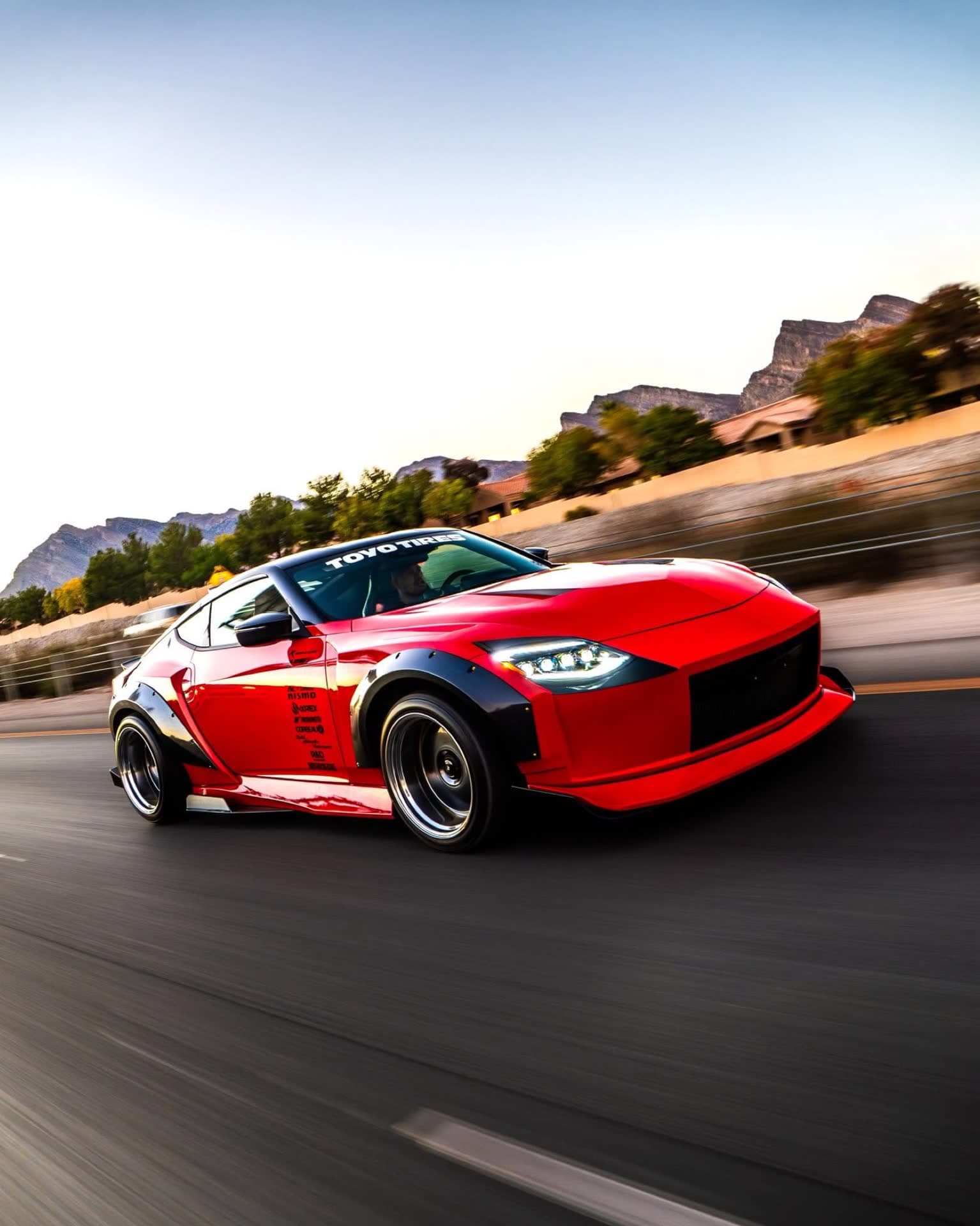
The Nissan Z’s 3.0-litre twin-turbo VR30DDTT responds strongly to calibration because the factory map is conservative. A custom EcuTek tune, matched to supporting modifications, took the Garage 46 Z to 504 horsepower. The parts that matter most are heat management, intakes, downpipes and exhaust, and a calibration written for the fuel you can actually buy in Manitoba, validated with logged runs.
Why the VR30DDTT tunes well
The VR30DDTT is a 3.0-litre twin-turbo V6 shared with the Infiniti Q50 and Q60 Red Sport. Nissan calibrates it to meet emissions and durability targets in every climate with any fuel, which leaves headroom. A custom calibration adjusts boost, fuelling and timing for a specific car, on a specific fuel, with specific hardware.
Heat first
The factory air-to-water intercooling on this engine is the first limit. Charge temperatures climb quickly under repeated load and the ECU pulls timing to protect the engine. The Z runs Mishimoto performance air-to-water intercoolers, a larger heat exchanger and an aluminium radiator for that reason. Tuning without addressing heat produces a number on one pull and heat soak on the second.
Breathing
Mishimoto performance intakes, Fi Exhaust upper sport and lower race downpipes, a front pipe, an X-pipe and a valvetronic exhaust let the turbos breathe and give the tuner room. Downpipes are the single biggest flow restriction on this engine, and they are also what makes a calibration necessary rather than optional.
The calibration
The Z runs an EcuTek custom tune by Sonic Tuned. EcuTek gives the tuner access to the factory ECU’s tables rather than a piggyback, so boost targets, fuelling, ignition and torque limits are calibrated together and the result can be data-logged in the car. With the hardware above, the car makes 504 horsepower, and more importantly it makes it consistently.
In Manitoba, the calibration also has to tolerate −30°C intake air in January and 30°C heat soak in July. That range is why a generic downloaded map is the wrong answer for a car that lives here.
A sensible order for your Z, Q50 or Q60
- Health check and baseline logs, so you know what you are starting from.
- Heat exchanger and intercooler upgrades.
- Intakes and downpipes, with the rest of the exhaust to taste.
- Custom calibration on the fuel you will actually run, then validation on the road with logs.
- Brakes, tires and suspension to match, because the car is now quicker than it was designed to be.