

The short answer
Choose air suspension if the car is low enough that curbs, speed bumps and Winnipeg’s frost heaves would otherwise be a daily problem, or if you want show height and driving height from the same car. Choose coilovers if the car will run one sensible height, you want the simplest system and the most consistent handling, and budget matters. Both can be set up to ride well.
What air suspension gives you
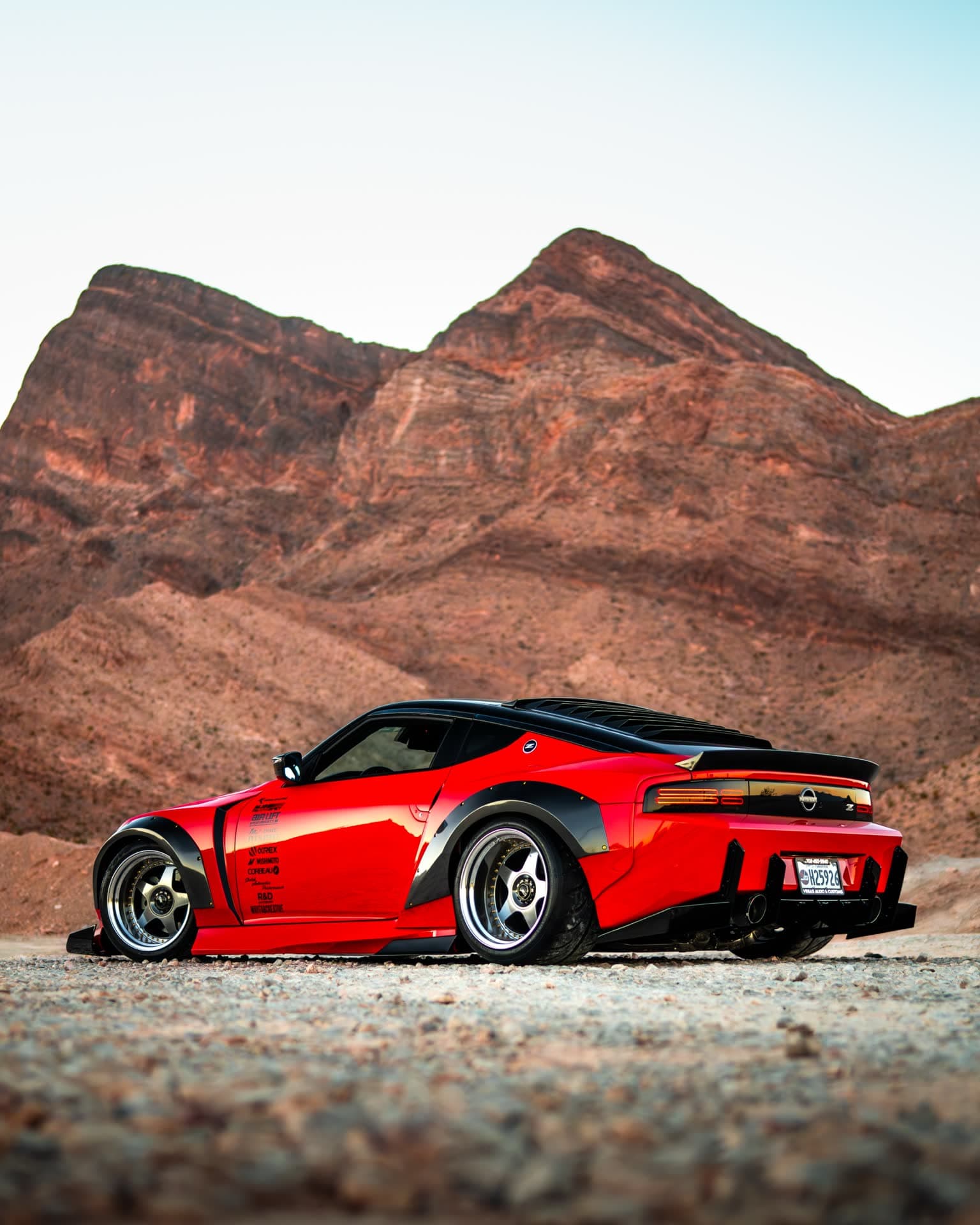
An air system replaces the springs with air bags fed by an onboard compressor and tank, controlled by a management unit with height presets. Our Z runs Air Lift Performance struts with ALP4 management: it lifts for the shop driveway and a Dugald Road frost heave, drives at a sensible height, and airs out on the Treadpass. For a widebody car with a splitter, that flexibility is the difference between driving it and trailering it.
Modern kits ride well. The bags act as progressive springs, and the dampers are adjustable like a coilover. The trade-offs are cost, complexity, trunk space for the tank and compressor, and more things to inspect: lines, fittings and the compressor itself.
What coilovers give you
A coilover is a spring and adjustable damper in one unit, with threaded height adjustment. Set once, aligned once, and it stays put. There is nothing to leak and nothing electrical. For a car that runs one height and sees track days, a quality coilover with the right spring rates is hard to beat for consistency.
The limit is the single height. If you set it low enough to look right at a show, the car has to live at that height every day, and in Winnipeg that means scraping. Our article on driving a lowered car through a Winnipeg winter covers what that costs you.
Manitoba-specific points
- Cold: air systems need a water trap and dry air; moisture in lines freezes. Compressors and management units should be mounted where they stay dry and above road spray.
- Salt: fittings and tank mounts corrode if they are plain steel. Specify stainless or coated hardware.
- Storage: an aired-out car sitting all winter is fine; a car with a slow leak settles unevenly. We check systems during storage prep.
- Potholes: both systems need an alignment after any hard hit, and the before-and-after numbers should be on your invoice.
Which one we recommend
For a widebody or heavily lowered car that will be driven in the city: air. For a car with a modest drop, especially one that sees the track: coilovers. If you are between the two, bring the car in with your wheels and we will measure what each option actually clears on your driveway, not a brochure one.